Stream all films and moving image works from the Frieze × ICA Artists' Film Programme, available worldwide from 14 October to 31 October.
Frieze and the ICA have curated a programme of artists’ film and moving image, coinciding with Frieze London 2025.
Artists:
Aline Motta
Ebun Sodipo
Luke Fowler
Nicholas Galanin
Hannah Black
Marianne Fahmy
Randolpho Lamonier and Victor Galvão
Toby Cato
Jessica Wilson
Martine Syms
Programme Information
This programme brings together new and recent works by Hannah Black, Toby Cato, Marianne Fahmy, Luke Fowler, Nicholas Galanin, Randolpho Lamonier & Victor Galvão, Aline Motta, Ebun Sodipo, Martine Syms and Jessica Wilson. Across animation, archival excavation, sound and performance, these films move between intimate portraits and collective histories, tracing fragile landscapes, contested memories and imagined futures. Together, they explore resistance, love and transformation through registers both poetic and political.
Film Synopses
Aline Motta, Natural Daughter (2018–19), 15 min 52 sec
Courtesy of the artist and Mitre Galeria, Belo Horizonte / São Paulo
Drawing on oral family traditions and a close analysis of historical iconography, Aline Motta investigates the possible origins of her great-grandmother, who was born around 1855 on a coffee plantation in Vassouras, a rural region of Rio de Janeiro historically known as a major centre of slavery in nineteenth-century Brazil.
Ebun Sodipo, Nasty Girl 2 (The Beast) (2024), 13 min 46 sec
Courtesy of the artist and Soft Opening, London
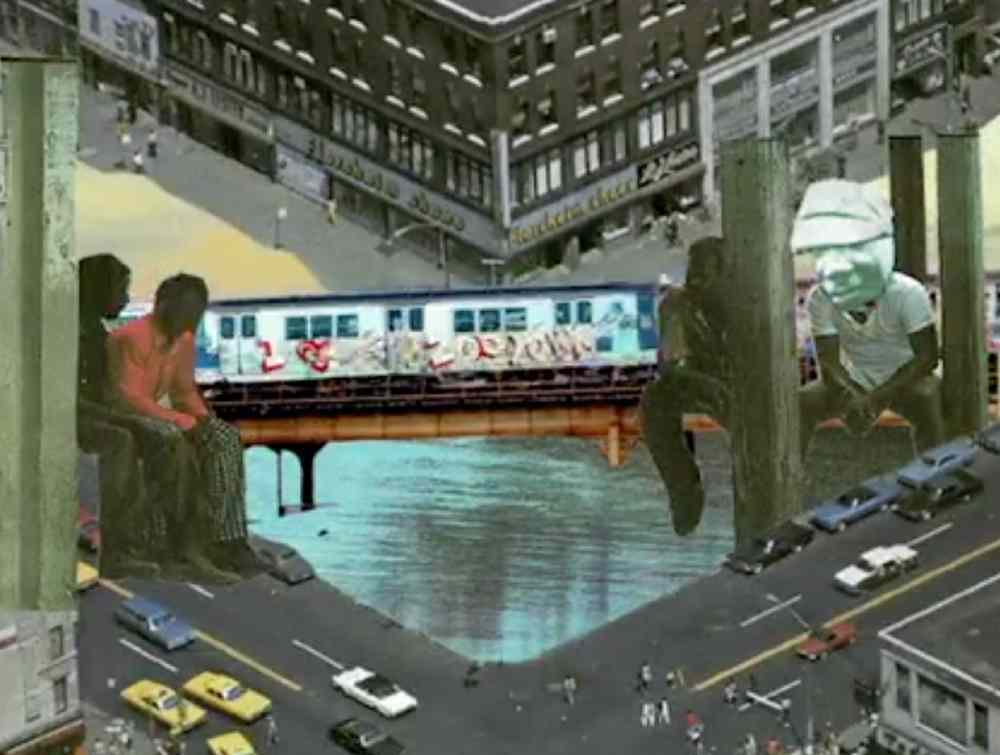
Using processes of research, excavation, and storytelling, Ebun Sodipo subverts established notions of race and gender as defined by history and its images. Through archiving and assemblage, she mines ancestral knowledge and visual culture to depict the Black transfeminine experience, interrogating where this presence exists within the broader archive of Black experience.
In this work, presented for the first time to a London audience, Sodipo employs collage as a technique for constructing both collective and personal narratives. Incorporating material from an extensive visual archive of found still and moving digital imagery sourced online, she embodies, reconstructs, and reinterprets social and art histories. Her filmic compositions restore neglected figures from the past, imagining and plotting a trajectory for trans futures.
Luke Fowler, Being Blue (2024), 18 min
Courtesy of the artist and The Modern Institute, Glasgow
In 2023, Luke Fowler undertook a residency at Prospect Cottage, the former home of artist, filmmaker, and activist Derek Jarman (1942–94). Jarman moved to Dungeness in 1986 after being diagnosed with HIV, transforming it into a space of creative production that encompassed film, writing, and horticulture – from his film The Garden to his journal Modern Nature, from etched-glass poetry to the shingle garden he designed.
Fowler’s film reflects on the landscape and weather of Dungeness as well as Jarman’s life, exploring the house he shared with his partner Keith Collins (1966–2018). The work touches impressionistically on themes of sexuality, queer British life, art-making, and nature, featuring newly discovered recordings of Jarman and readings from his books by Neil Bartlett. These are interwoven with field recordings by Fowler and Chris Watson, and an original score by Oliver Coates and Simon Fisher Turner.
Nicholas Galanin, kʼidéin yéi jeené (You’re Doing Such a Good Job) (2021), 2 min
Courtesy of the artist and Peter Blum Gallery, New York
kʼidéin yéi jeené (‘you’re doing such a good job’) samples words from the Lingít language, spoken by the Indigenous peoples of the Pacific Northwest Coast of North America. The phrases express love and care addressed to an Indigenous child in an Indigenous home, centring the safety and connection experienced within these communities. The work critiques false historical narratives and the generational trauma inflicted by settler colonialism – an ongoing system of oppression based on genocide that continues to displace and erase Indigenous peoples and cultures.
Hannah Black, Broken Windows (2022), 15 min 42 sec
Courtesy of the artist and Arcadia Missa, London
In Broken Windows, two organisers reflect – and disagree – on the “translation” of the 2020 uprising following George Floyd’s murder into policy and politics. Two years later, luxury stores have removed their plywood barriers and restocked their shelves of leather handbags and designer clothing, exposing the uneasy assimilation of protest into consumer culture.
Marianne Fahmy, Laws of Ruins (2024), 13 min 48 sec
Courtesy of the artist and Gypsum, Cairo
Marianne Fahmy’s Laws of Ruins explores the history of water through a parafictional lens, positioning cisterns as potential symbols of resistance and reformation. The film layers a poetic voice-over onto archival and original footage, featuring excerpts from the memoirs of Arwa Saleh, a prominent Egyptian activist in the radical student movement of the 1970s. Interweaving memory and ecology, the work considers demolished sites as repositories of collective memory that, through remembrance, gesture towards alternative futures.
Randolpho Lamonier and Victor Galvão, DOOM (2021), 4 min 56 sec
Courtesy of the artists and Portas Vilaseca Galeria, Rio de Janeiro
DOOM was created during an art residency in Itabirito, Minas Gerais, Brazil. Combining animation, performance, and collage, the work incorporates everyday materials to construct a fragmented narrative of atmosphere and sensation. It reflects critically on time, rejecting both past and future in favour of an unstable present in which error becomes a form of learning. Evoking ruin, urgency, and collapse, the film proposes a poetics of resistance through visual and symbolic experimentation, addressing the uncertainties of contemporary life with a hybrid and reflective approach.
Toby Cato, Cato Zone (2021), 1 min
Courtesy of the artist and Harlesden High Street, London
A self-taught animator living in South East London, Toby Cato began learning animation from Richard Williams’s book The Animator’s Survival Kit at the age of 18. He experiments with physical media to create the illusion of life and movement, producing his own music – infused with experimental hip-hop and funk – to accompany his animation.
Cato’s Jamaican heritage is a central inspiration in his work. Influenced by Jamaican cinema and by experimental animators such as Frank Lebon, Lotte Reiniger, and Ralph Bakshi, he constructs dreamlike realities that blur the line between identity and imagination. His recent animations explore questions of selfhood and representation, challenging how Black and female characters are portrayed in film and animation.
Jessica Wilson, Smile Driver (2019), 7 min 56 sec
Courtesy of the artist and diez, Amsterdam
Smile Driver is a computer-generated animation following childlike figures through movements that are at once familiar and surreal – yawning, handwashing, hair growing uncontrollably – blurring the boundary between the habitual and the uncanny. Glitches ripple through their environment, revealing its digital construction. Drawing from online motion data, Wilson animates bodies with unsettling precision, creating a composite portrait of shared human gestures and desires. The work reflects on contagion – of emotion, movement, and information – within digital culture.
Martine Syms, DED (2021), 15 min 47 sec
Courtesy of the artist and Sadie Coles HQ, London
In DED, Martine Syms appears as an avatar created through a 3D scan of her body. Over sixteen minutes, against the backdrop of a vast twilight space, Syms is repeatedly reborn and destroyed. Accompanied by a shifting soundtrack of emotive pop – strings, acoustics, and synth pads – the lyrics reflect on the challenges of interpersonal relationships and the human condition. The words “to hell with my suffering” appear on her clothing as she cycles through life and death, hope and despair, power and powerlessness, endlessly suspended in limbo.
This year's selection panel comprised Steven Cairns (Head of Artistic Programme, ICA) and three international experts: Helena Kritis (Chief Curator, WIELS, Brussels), Julian Ross (Head of Film Programming & Distribution, Eye Filmmuseum, Amsterdam) and Almudena Escobar López (Curator, Scholar, and Archivist, Toronto Metropolitan University).

Film Programme
Courtesy of the artist and Mitre Galeria, Belo Horizonte/ São Paulo.
Courtesy of the artist and Soft Opening, London.
Courtesy of the artist and The Modern Institute, Glasgow.
Courtesy of the artist and Gypsum, Cairo.
Courtesy of the artist and Harlesden High Street, London.
Courtesy of the artist and diez, Amsterdam.
Courtesy of the artist and Sadie Coles HQ, London.