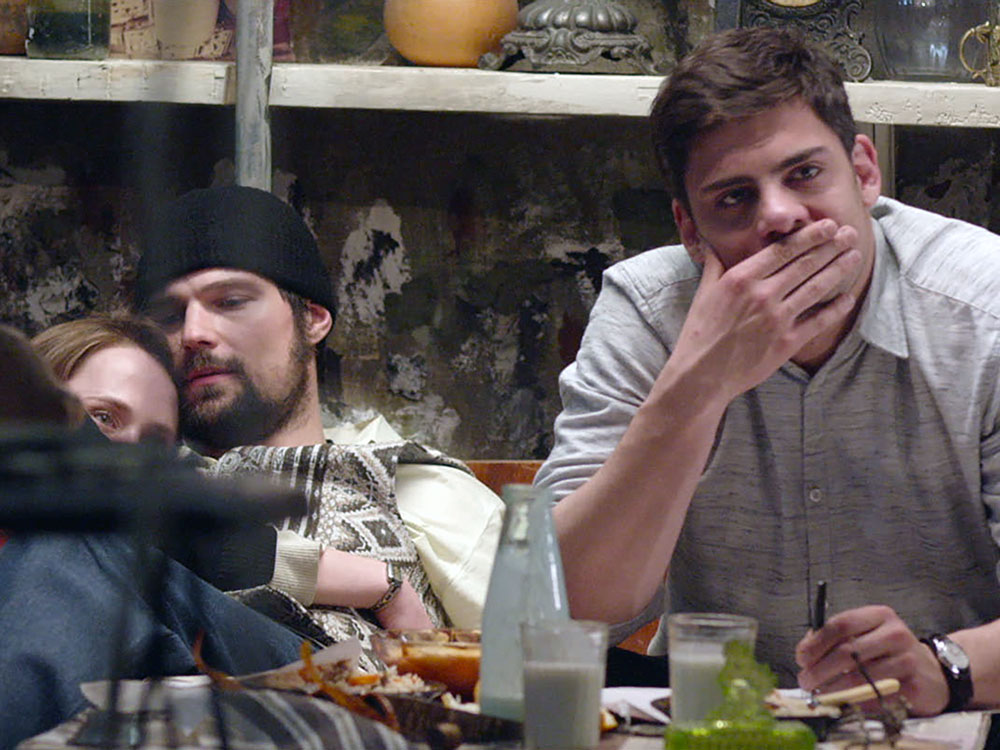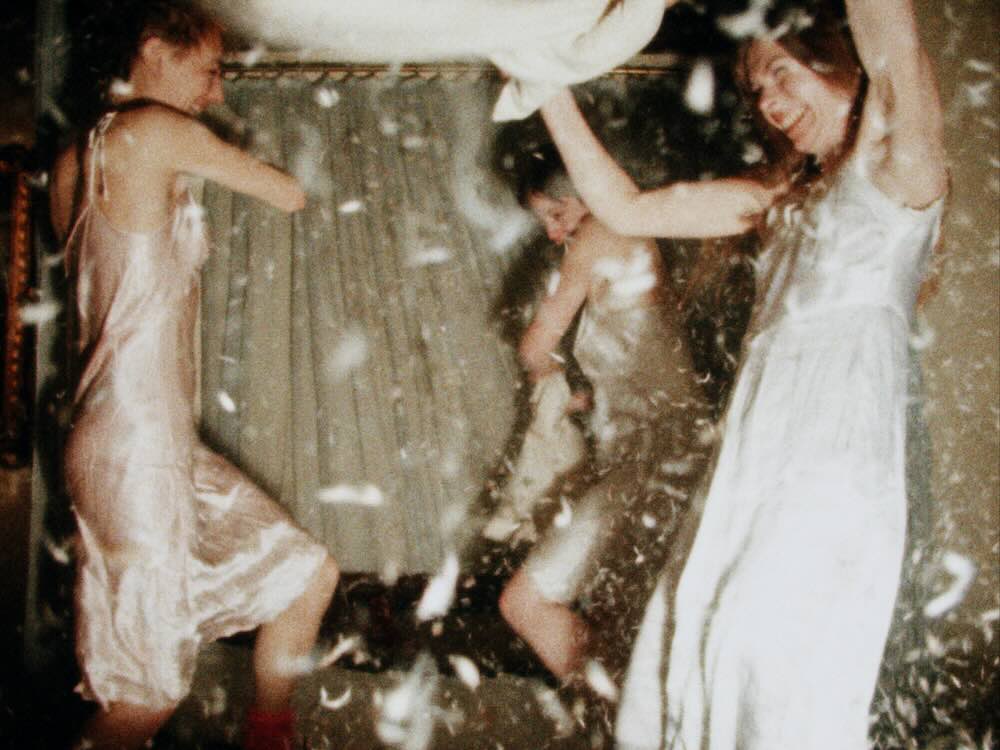
Nightshift, dir. Robina Rose, UK 1981, 75 min.
Book tickets
Step into three very different sites of cinematic dressing, in which rooms are worn like clothes. In the 20th century, homes and their furnishings were increasingly marketed according to the logic of fashion, each successive style promising to capture our singular personalities. In the post-punk era, as cracks appeared in the supposed ideals of the nuclear family, home ownership and consumer economics, a new attitude emerged that embraced bricolage, decay and the communal. Across these films, excess, ruin and transience shatter the myth of the commodified interior’s inviolable individualism. Adorned in the fragments of this disintegration, the protagonists forge a creative, collective counterculture that still resonates today.
Programme
Faster Princess, dir. Martine Thoquenne, UK 1982, 7 min.
Faster Princess is, in the words of artist Martine Thoquenne, ‘a Cinderella fantasy […] a piss-take’. The film opens among the pages of a pop-up fairy tale, whose flattened characters and spaces metamorphose into three dimensions by the artist’s hand as she works in her studio. This post-punk Pollyanna sets about her own adornment, becoming the perfect princess thanks to a cut-out dress and an array of plastic accessories and toy cosmetics. Mixing live action and animation, the film folds image and reality together. Footage of Lady Diana Spencer riding in a horse-drawn carriage to St Paul’s Cathedral to marry the Prince of Wales in 1981 is intercut with images of Thoquenne greeting the crowds from her own apartment. Fantasy is layered over artifice as the studio becomes a ballroom, generating palpable pleasure in the theatrics for the artist and her friends.
Like Dawn to Dust, dir. Vivienne Dick, Ireland 1983, 6 min.
Like Dawn to Dust opens on a shot of a burned-out country house, with a foreboding piano accompaniment that seems lifted from a silent-era horror film. A poet and performer associated with the New York no wave scene, Lydia Lunch appears clad in black, her hair loose as she clings to the side of the building. The film alternates between images of the rural landscape and Lunch’s theatrical costume as she paces among the rubble of the house and through the surrounding countryside, wearing red lipstick, red nails and a silver nose ring. The soundtrack mixes Lunch’s distinctive spoken-word poetry with a repeated refrain from the song ‘In Heaven’ (originally written for David Lynch’s 1977 film Eraserhead) and percussive folk music. Made in Ireland after filmmaker Vivienne Dick returned from New York in 1982, the film stages what Maeve Connolly has described as an encounter between Irish and American gothic. Juxtaposing the derelict Anglo-Irish house with the lush Connemara peatlands, it continues Dick’s earlier exploration of the convergence of public and private spaces through commerce and colonialism.
Nightshift, dir. Robina Rose, UK 1981, 75 min.
Nightshift begins and ends with the hours of work performed by a single employee on the front desk of a hotel – played by the icon of 1970s and 1980s London subculture, Jordan. Bathed in the light of a brass clam shell gooseneck lamp, she is resplendent, like a post-punk Queen Elizabeth I, as she goes about her humdrum duties. As the minutes and hours pass, the camera mimics her roving, impassive gaze to follow a wide variety of guests as they come and go, each carrying their own aesthetic and emotional world into, and out of, their room. Nightshift was made in five days over Christmas at the Portobello Hotel in Notting Hill, one of London’s first ‘boutique hotels’, meant to appeal to the affluent, self-consciously artistic class that emerged at the end of the 1970s. Both director Robina Rose and co-writer Nicola Lane worked shifts at the hotel and, as Lane remembers, did their best to outmanoeuvre the pretensions of the fashionable guests. The cinematography by American filmmaker Jon Jost and score by Penguin Café Orchestra enfold the miniature dramas of each guest (played by the likes of Anne Rees-Mogg, Countess Vivianna de Blonville and Heathcote Williams) as night gives way to dawn.
This programme is curated by Inga Fraser.
Nightshift has been digitally restored in 4K by Lightbox Film Center (Philadelphia), in collaboration with the British Film Institute and Cinenova. Restoration funding was provided by Ron and Suzanne Naples. The film is distributed by Cinenova.
Book tickets
Thu, 03 Dec 2026
Cinema 1
08:40 pm
Ticket information
- All tickets that do not require ID (full price, disabled, income support) can be printed at home or stored in email
- For aged-based concession tickets (under 25, student) please bring relevant ID to collect at the front desk before the event.
Access information
Cinema 1
- Both our Cinemas have step free access from The Mall and are accessible by ramp
- We have 1 wheelchair allocated space with a seat for a companion
- All seats are hard back, have a crushed velvet feel and they do not recline
- These are our seat size dimensions: W 42 x D 45 x H 52
- Arm rest either side of the seat dimensions: L 27 x W 7 x H 20
for the following requirements:
- We have unassigned seating. If you require a specific seat, please reserve this in advance
- Free for visitors where ticket prices are a barrier, please email
All films are ad-free and 18+ unless otherwise stated, and start with a 10 min. curated selection of trailers.
Members+ and all Patrons gain free entry to all cinema screenings, exhibitions, talks, and more.
Join today as a Member+ for £25/month.